
Political parties in India are moving away from conventional campaign tactics and toward primarily digital marketing strategies as we get ready for the 2026 Legislative Assembly Elections. Social Media in Politics India is the second-largest online population in the world, with over 650 million internet users. These online channels are used by political parties to sway voter behavior.
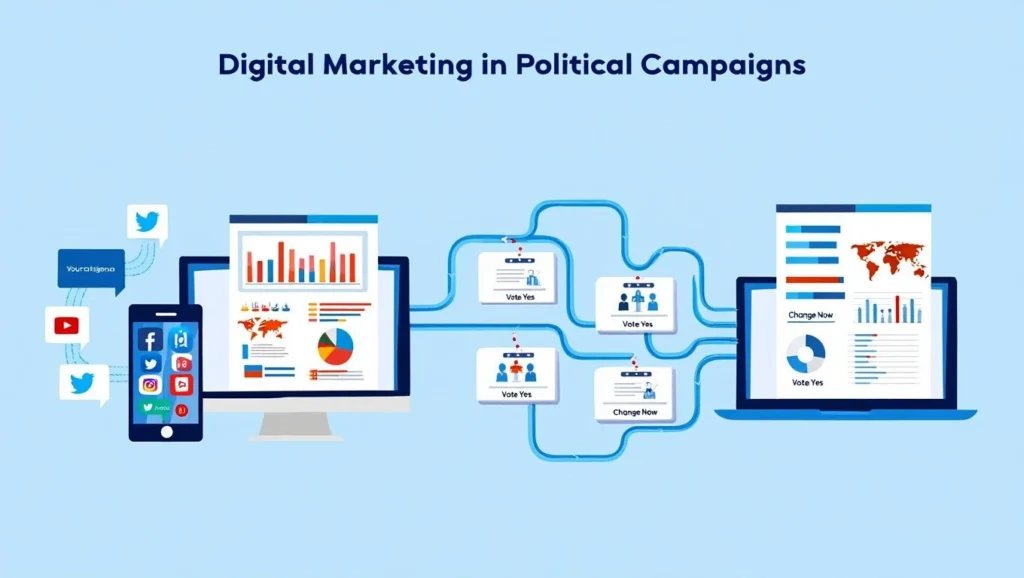
What is Political Digital Marketing?
Using internet resources to advertise political parties and candidates is known as political digital marketing. Email marketing, website advertisements, and social media campaigns pertaining to election campaigns and political messaging are all included in the category of social media in politics
Political parties deploy digital marketing to communicate their messages to a mass audience of voters. Politicians broadcast their positions and ideas online in order to communicate with large groups of voters. Each campaign promotes awareness and aims to motivate action, and therefore digital marketing is transformed to become a significant change agent with enhanced reach to the intended audience. Social Media in Politics candidates need marketing in order to make sure voters learn about them and their ideas. It is a great way to provide familiarity, to explain policies, and to educate people about voting for them.
Why do Political Candidates need Marketing?
In today’s crowded political landscape candidates need permissive marketing techniques to provide their views and ideas about their party to voters and the community. This will give candidates the platform for fighting for their ideas or against their opponents, in a crowded field. Social Media in Politics through political campaign marketing candidates can reach a larger audience with their messages. This also can address it to specific community needs. Digital marketing allows businesses to communicate with a variety of audiences using a variety of online platforms. Individual companies can incorporate these ideas using their own specific strategies to target either segments of consumers and large groups of the entire community. Ethical marketing provides democracy by providing the public with a lot of different sources of information for consideration.
Political marketing uses simple and straightforward methods of engaging voters in order to win elections. Leaders focus on simple, direct, clear messaging and social media campaigns based on what addresses the daily issues.
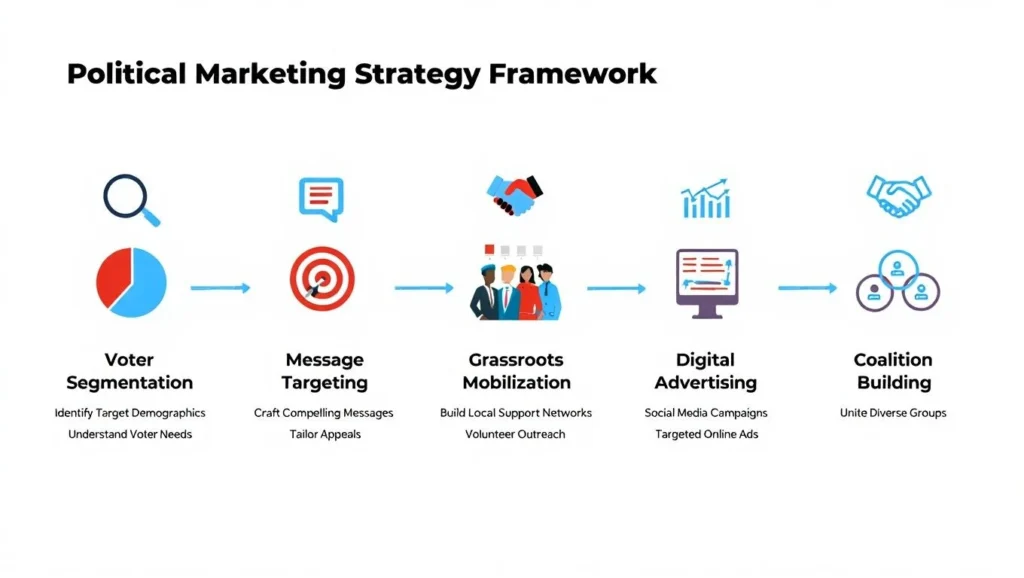
Political Marketing Strategies
- Social Media Marketing:
Social Media in Politics it helps brands candidates and offers targeted advertising. Because online targeting and advertising, even with lost-cost social media messages, because valuable name recognition from celebs is available to reach new audiences. Engaging through various social media by posting informational or persuasive content on social media sites like Instagram, Youtube, Facebook, and Twitter to engage them and inform voters about candidates views and possibly influence voters political ideology and decision.
- E-mail Marketing:
Emailing lists help build and manage contacts to support other communication. Those lists could share political opinions or views, or ask for money or supporters to respond and help volunteer.
- Search Engine Optimization:
Search engine optimization practices are also used to improve candidate campaign sites, or political blogs ranking to assist voters with immediacy in locating information, when they are trying to learn about candidates and their political party affiliation.
- Influencer Partnership:
Political parties are going to use social media and influencers, and celebrity endorsements, to find accept or new voter audiences and target them to influence their voting behavior preference.
- Mobile Marketing
Another method to target voters and connect to some campaign strategies is through mobile phone SMS messages, mobile apps, or mobile interactive polls.
- Online Fundraising:
Online donations, or fundraising is occurring on online platforms to accept and ask for donations while also engaging candidates with opportunities to fundraise to the very same audience who are already supporters of the campaign.
Social media in Politics for many candidates there is no doubt the need for digital marketing, since so many people can be reached now in more cost effective way. Social Media it assists their organizations to reach their target audiences to develop individual personalized messaging using digital media marketing to that specific population better understand.
How Political Digital Marketing Can Help Your Campaign
Imagine that you have conducted an electoral campaign for a longer time period, compared to months. Think of all of the things you would learn about the process of communicating with your electorate and the process involved in getting that electorate to vote for your candidate. Well, the digital industry has been doing the same thing in an industry for as long as digital has been a part of life. Social Media in Politics integrated campaign processes take the lessons from digital marketing and apply them to political campaigns that are required to accelerate their supporter engagement plans and strategies.
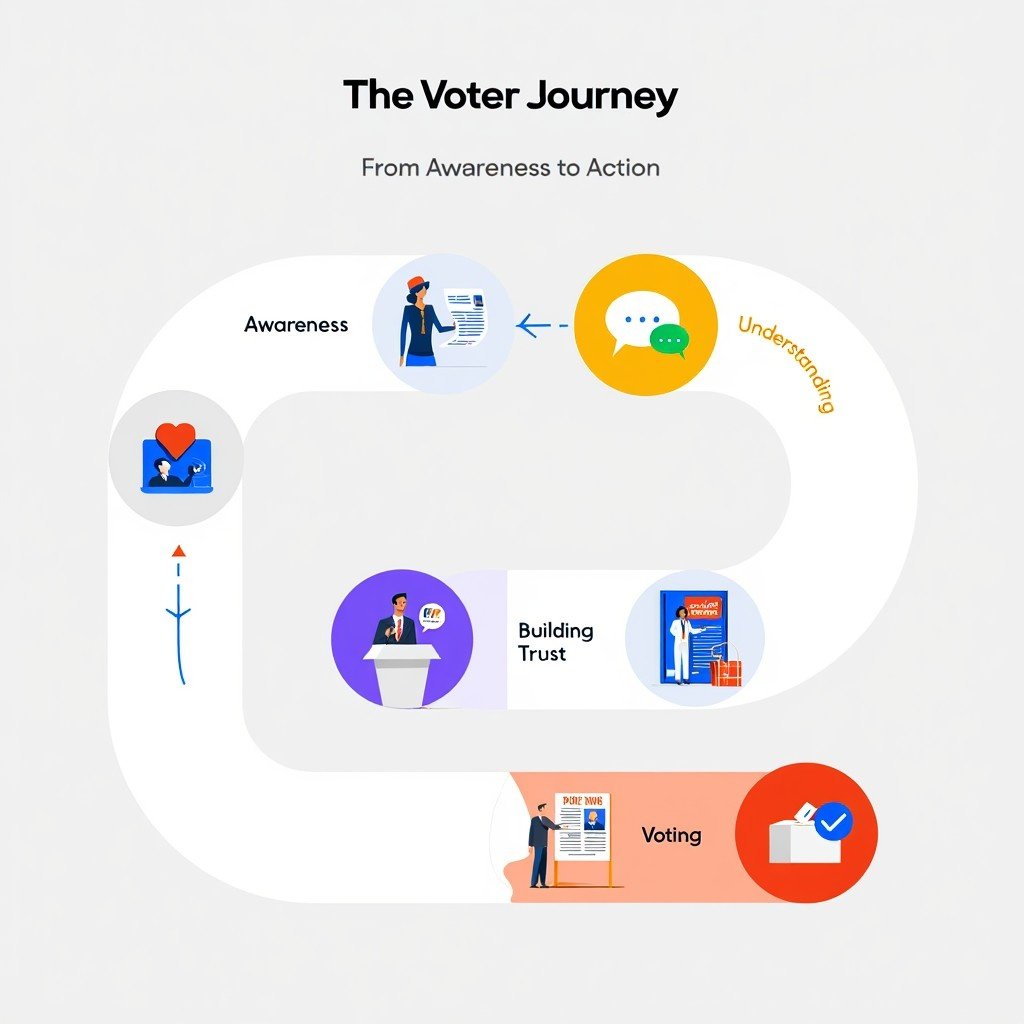
Integrated campaigning acknowledges that all of your campaigning activities are somehow related. They operate together to feed information into a campaign and the information is then turned into the political messages that go out to the electors. Digital marketing can be used to accelerate the rate of growth in your campaign in a number of different and unique ways.
Start with your Voter Database
Knowledge is a powerful tool in political digital marketing, gathering voter data and micro-segmenting data points in multiple ways to target electorates will provide your political campaign with the best chance of success. Social Media in Politics your voter database – even if it’s just an electoral register – is the most valuable resource at the beginning of your campaign. Even contact details as physical address (for canvassing and mail shots), phone numbers (for phonebanking), email or social media will be extremely useful to your campaign. You can augment this database with website subscriptions, social media engagement or even people’s details captured in the field. The better your database, the better you will be able to engage an electorate.
Segment and Target Across Channels
In political digital marketing, a lot of time is spent segmenting a database to deliver specific messages to specific individuals. At the broadest level, you will want to segment by area, as many messages are relevant only to the area in which a particular person resides. You can segment by voting history, and depending on the person’s voting history, deliver an affirmation or persuasive message. You can also segment based on whatever other voter data you have access to, which may include income level, number of dependents, health insurance coverage, etc.
Social Media in Politics as a general rule of thumb for anyone conducting database segmentation, spend 5-10 hours focusing on segmentation and then establish at least 10 different segments that can be subdivided or cross-segmented as the campaign goes along. Segmentation can be based on, among other things, demographics, geography, voting preference, and hot-button issues, as well as registering to vote or not. Everyone on the campaign team should understand each of the key segments and actively contribute to developing them with ongoing data from their campaigning.
Develop Messaging and Package it for Channels
Campaigning, similar to political digital marketing, specializes in the encoding of information and how that resonates for the electorate. Your campaign should have a list of themes it wants to emphasize such as equity, jobs, change, etc. All messaging will relate to those themes with the aim of creating a clear proposition for the voters. Themes can be complicated, but messaging can often be distilled down to simple for packaging for, social media, rallies, media spots, campaign merchandise, etc.
Understand The Power of Brand Awareness
We live in a world of extreme branding and political campaigns certainly need to understand this the same way a digital marketer would. A campaign brand should be developed in reference to the candidate/campaign history and the overall campaign theme. For example, if I am a candidate that is an army veteran and my campaign theme is cleaning up the city of crime, then my brand positioning might reflect that I am tough on crime. That positioning can then be developed so it makes perfect sense for the candidate to demand greater discipline in the education system, or to coordinate city services in a more structured way.
What is important with any brand is that it is clear and that it is repeated often. Social Media in Politics the more times that a brand is put out there, the easier it is for voters to buy into it and the easier it is for them to understand what that candidate’s position might be on a topic even if they have never spoken about it. Great brands like Angela Merkel, Bernie Sanders, and even Arnold Schwarzenegger are a clear proposition and are hard to ignore on the ballot sheet.
Political Messaging is Content
Political messaging content is anything like blogs, taglines, slogans, videos, campaign images, memes or any other communication assets that can be consumed. “Read my lips, no more taxes”, was content delivered by George Bush Snr. that helped him to lose the presidency. The Hope image of Barack Obama was content, as was his inauguration speech. They didn’t pluck these things from thin air. They were developed from the information flows into the campaign. From emails received, tweets at the candidate, conversations in the community, the electoral ‘mood’ begins to emerge and the campaign team need to develop content that reflects that mood.
Application of Digital Marketing Principles of Social Media in Politics
The entirety of your political digital marketing and canvassing team should be able to reach voters on a variety of platforms and with various types of content, but the stories, thematic messaging, and language should be tight and cohesive. Make sure to train with your team to drive home the idea of integrated campaigning and the strength of political branding and political messaging. Putting these simple ideas into practice will greatly improve your communication techniques and help you to persuade your electorate!